
Biotechnology Laboratory
Director
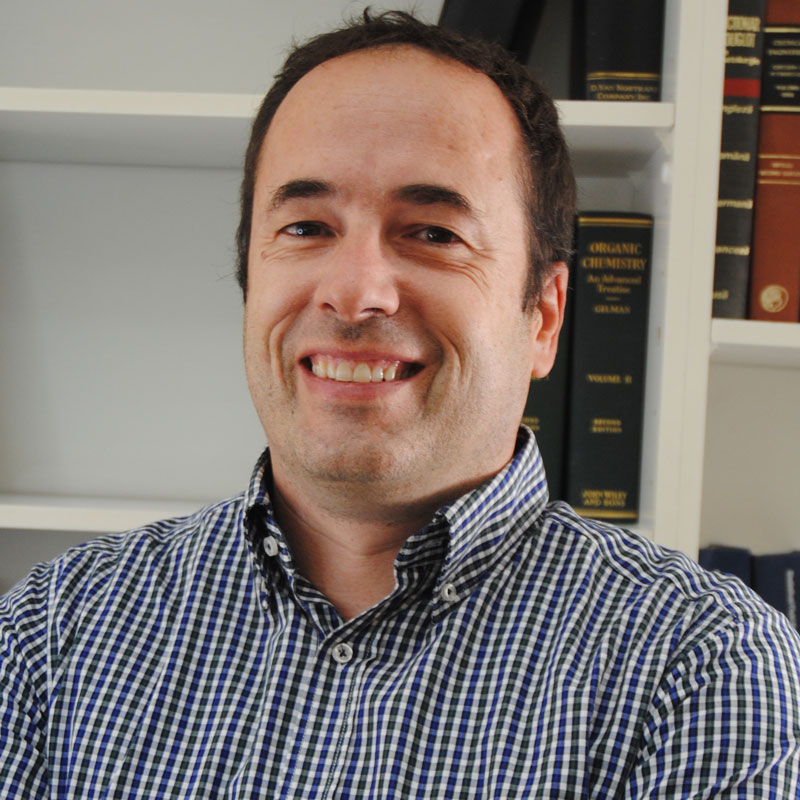 E. Topakas, Professor
Laboratory Personnel
E. Topakas, Professor D. Mamma, Assistant Professor
 E. Nikolaivits, Laboratory Teaching Staff
The Laboratory of Biotechnology (Government Gazette, 66A, 2001) is located within the School of Chemical Engineering (Sector IV: Process Analysis and Plant Design) of the National Technical University of Athens (NTUA).
The academic staff of the Laboratory covers the teaching of the following courses:
- Principles of Cell Biology and Biochemistry (5th semester, Ch.E.)
- Biochemical Engineering (7th semester, Ch.E.)
- Industrial Biotechnology (8th semester, Ch.E.)
- Bioengineering (9th semester, Ch.E.)
- Environmental Biotechnology (10th semester, Ch.E.)
The Laboratory also supports the laboratory components of the following courses:
- Industrial Biotechnology (8th semester, Ch.E.)
- Bioengineering (9th semester, Ch.E.)
- Environmental Biotechnology (10th semester, Ch.E.)
The research activities of the Laboratory concern the following areas:
- Biotechnological production of biofuels – Biorefinery
- Saccharification and fermentation of agricultural residues for the production of second-generation biofuels
- Production of biopolymers and bioactive compounds from residual biomass and industrial by-products
- Utilization of lignocellulosic biomass for the production of high added-value products from microalgae
- Use of olive mill wastewater for microbial production of industrial enzymes and nutraceutical products
- Biocatalysis
- Discovery and production of new recombinant biocatalysts for the modification of plant cell walls
- Study of the function/structure of novel biocatalysts and catalytic mechanisms on natural substrates
- Synthesis/modification of bioactive compounds and biologically derived polymers
- Modification of textiles and packaging materials
- Enzymatic synthesis of food additives (prebiotics)
- Synthesis of high added-value products in non-conventional systems
- Environmental Biotechnology – Bioremediation
- Discovery of novel marine biocatalysts for degradation/removal of pollutants (halogenated, aromatic, etc.)
- Design of biodegradation/removal processes using immobilized or free cells [design of bioreactors (CSTR, PBR) and study of their operation]
- Development and evaluation of innovative biocatalysts and processes for effective desulfurization of petroleum fractions
- Bioinformatics – Metabolic Engineering
- Metabolic engineering (flux analysis, metabolic control analysis, use of enzymatic kinetics data at the systems level)
- Functional (meta)genomics and transcriptomics (interpretation of microarray experiments, analysis of next-generation DNA & RNA sequencing data, promoter analysis)
- Pathway analysis (automated construction of metabolic and signaling pathways)
Laboratory Infrastructure
The Biotechnology Laboratory covers an area of approximately 400 m2, with infrastructure ranging from genome analysis and heterologous gene expression of interest, to pilot-scale production of final products, including downstream isolation processes. Specifically, it is equipped with: (a) computational resources including: i) 2 servers each comprising 64 CPUs, 512 GB RAM, and ~7 TB disk capacity, ii) 1 server comprising 64 CPUs, 256 GB RAM, and ~500 GB disk capacity, (b) molecular biology facilities (PCR, electrophoresis and electroporation units, ultrasonic cell disruptors), (c) facilities for small-scale cultivation of bacteria, yeasts, fungi, and microalgae (incubators, photo-incubators), (d) bioreactors for submerged culture with working volume from 50 mL to 150 L, prototype photobioreactors and solid-state bioreactors, (e) downstream processing devices: ultrafiltration units with working volume from 10 mL to 100 L, protein separation columns and materials such as ion exchange, hydrophobic interactions, gel filtration and affinity, (f) analytical devices [gas (ECD, FID detectors) and liquid chromatography (HPLC, GC, HPAEC, GPC)] for the identification and quantification of metabolites and fermentation products.